Sunday, November 24, 2024

AI for PPE Compliance: How Computer Vision Transforms Safety

 In fast-paced industries such as construction, manufacturing, mining, and food & beverage, the issue of worker safety always tops the agenda. Safety in the workplace was driven through standards that have emerged through the years, yet after all these years, accidents still occur, sometimes due to carelessness, lack of supervision, or by being simply an accident. It is here that technologies like Computer Vision for PPE Monitoring will come to their rescue. Such advanced AI systems do more than improve safety; they bring Asia's prosperous industries closer to achieving higher efficiency and reduced risks.
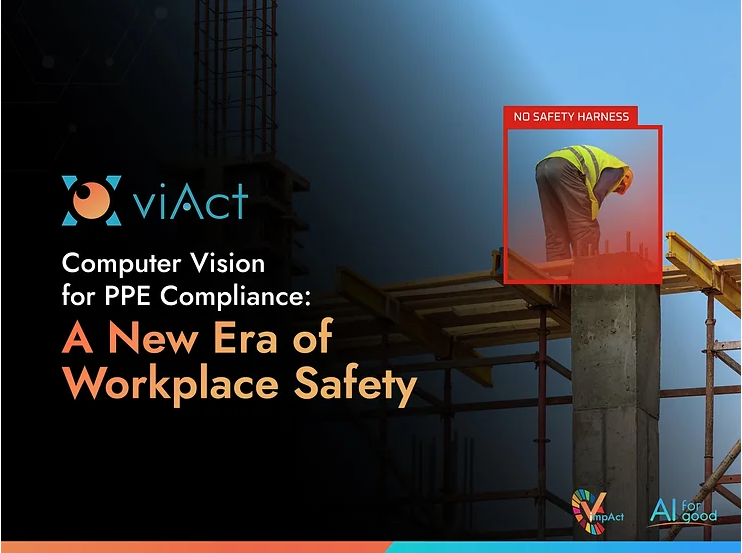
In this blog, you will understand the role of  Computer Vision monitoring for Safety and how it helps to do mining in the industry.

What is PPE Compliance?

Personal Protective Equipment, or PPE, is the need of the hour for all sectors. To reduce injuries, workers must be equipped with helmets, gloves, and safety glasses, as well as hearing protection. But getting people to wear this sort of protective gear correctly and consistently is not easy. In construction, mining, and manufacturing plants, failure in adherence to PPE can result in some gruesome accidents and even a loss of lives.

Monitoring PPE requires checks and inspections, which have traditionally been manually covered. The process can be quite cumbersome and is likely to be prone to human error. With computer vision technology now available, businesses can now automate this process, preventing a high probability of accidents and keeping workers safer.

How Computer Vision for Monitoring PPE Works

At the heart of this technology is AI-driven computer vision which takes use of images or video footage and analyzes them, detecting whether workers are wearing the required protective gear. It must work in real-time and alert an employee who fails to abide by PPE regulations immediately. These alerts can be forwarded directly to supervisors, safety officers, or even the workers themselves. Such alerts will enable immediate corrective actions.


With the help of computer vision monitoring for PPE, there is no scope for human error or oversight. It continuously monitors the workspace with cameras that already exist at the workplace to bring to light real-time insight and ensure safety standards are maintained. AI beauty lies in its ability to find microscopic deviations from guidelines regarding safety — be it a missing helmet by a worker or a harness, which isn't tied up correctly.

Advantages of AI-Based PPE Monitoring

Enhanced Safety Standards

The most critical benefit that computer vision offers for PPE is the enhancement of safety. AI does not save anyone from entering a danger zone without appropriate protection. Such a system can easily identify non-compliance, thus preventing loss of life or injuries. In industries such as construction and mining, which involve very high risks, safety at work depends on this kind of monitoring in real time.

Minimum Workforce Injuries and Accidents

Studies have also indicated that most fatal accidents within the high-risk sectors would be avoided in case the workers always put on the appropriate PPE. Some reports show that 95% of fatalities attributed to non-compliance with PPE use would be prevented if effective monitoring systems were in place. Computer vision minimizes these risks because it ensures a person puts on his protective gear without fail.

Cost Savings and Increased Profitability

Accidents in the workplace are costly affairs with the costs of medical bills, compensation claims, insurance premiums, and lost productivity. Spending money on AI for PPE compliance helps the company to spend less. For instance, in hazardous environments such as mining and construction sectors, ensuring that their employees are protected all the time limits the extent to which chances of expensive accidents would escalate, thereby leading to more profits and wealth.

More Efficient and Productive

Whereas manual safety inspections are normally very time-consuming, and the resultant delay of the workflow can cause a halt in production, AI-based monitoring of personal protective equipment removes a bottleneck by self-inspecting PPE. Real-time alerts help a safety officer focus the attention on immediate risks, thereby overall efficiency of operation. The system also quickly analyzes huge amounts of data and provides valuable insights into the trends in safety and areas that have room for improvement.

Better Decision Making with Data-Driven Insights

Computer vision in PPE monitoring does not only provide alerts to employees of non-compliance but also aggregates valuable data related to trends in safety. This would then be very useful in being able to analyze repeating issues, perhaps the most common PPE violation locations or times of day prone to forgetfulness of gear. The information provides the best managers to determine which employees require training or revising safety protocols or the prudent distribution of equipment throughout the workplace.

Smoother Integration with Other Systems

AI-based PPE monitoring is one of the best things that can integrate with pre-existing systems such as CCTV cameras or industrial cameras. Business organizations don't need to put an investment into new, specialized equipment; rather, it uses footage captured by cameras already available in place, cost-effective and easy to implement.

Use Cases in the Real World within the Industry

The opportunities of AI can become a vast means for attaining PPE compliance other than on-site construction or manufacturing plants, such as in mining, the automotive, food & beverage industries, and even smart cities. In the mining industry, workers are exposed to extreme conditions most of the time. Hence, non-compliance with PPE can expose them to fatal situations. With computer vision mining, the companies will monitor and implement the use of PPE, drastically reducing the possibility of accidents and fatalities.

In food & beverage firms, similarly, employees handling the machinery and equipment can automatically be traced to ensure proper usage of PPE in order to avoid injuries from breakages or environmental exposure to equipment.

Conclusion

Compliance with PPE through embracing AI by businesses will not only improve the safety of workers but also open the door to a smarter, more efficient, and profitable future. As industries in Asia, especially in manufacturing, automotive, and government sectors, continue to grow, computer vision for mining in an enhanced form becomes highly important for workplace safety. So, don't wait; visit the viAct and take the first step to a safer, smarter, and more profitable workplace today.

Visit Our Social Media Details :-

Facebook :- viactai

Linkedin :- viactai

Twitter :-aiviact

Instagram :-viactai/

Blog Url :-

5 Reasons AI Video Analytics is Key for Damaged Product Detection

Empowering EHS Teams with Conversation AI for Safety

Wednesday, November 13, 2024

Integrating Generative AI and IDD for a Smarter, Faster Construction Workflow

 As a new industry, construction is booming fast with new technology introduced in the business to make the industry more efficient, safe, and productive in all operations. In these regards, one such advancement lies in the possibility of connecting Generative AI Solutions with Integrated Digital Delivery, or IDD. The latter technologies, respectively, are changing how companies approach managing construction projects, holding large promises for faster error-free deliveries and better standards of safety.


From this blog, you will learn how Generative AI and IDD are set to change the workflows in construction and give answers to all of those headaches that many construction professionals are facing today.

What is Generative AI, and How Does It Improve the Construction Process?

A very viable benefit of Generative AI for construction is its enhancement of the safety standards in it. AI, when integrated with video surveillance, allows site construction operators to monitor not only for hazards and unsafe practices but also to monitor real-time behaviour.

The AI immediately senses cases of unsafe practices. Such includes the presence of essential PPE not donned on the workers' uniforms, faulty operation performed with machines, and danger being a hazard in restricted zones. These experiences raise an instant alert to the safety teams to act in time and prevent accidents before they become a calamity.

What is Integrated Digital Delivery (IDD)?

IDD, or Integrated Digital Delivery, combines digital technologies applied to designs and stages of implementing the construction project. IDD employs, in integrated power, the use of Building Information Modeling, project management software, and collaborative platforms that later give a central view of the project status in real time. IDD breaks open the silos that traditional construction workflows shut up, giving everyone-from architects and engineers to contractors and suppliers-real-time access to the same data.


With Generative AI and IDD: Fantastic Synergy

If Generative AI Solutions is teamed up with Integrated Digital Delivery, improvement margins on construction workflows would be multiplied. Here is how the two technologies could be mixed to make the construction process efficient and optimised as follows:

The generative AI shall be well interconnected to handle and review large amounts of data coming from different sources, such as construction equipment, worker behaviour, and environmental conditions. This shall immediately give real-time insights. IDD can realise this by bringing together and automatically syncing relevant information across the digital ecosystem of the project so that the latest information reaches everybody with a stake in the project. Better, speedier decision-making shall spearhead the project.

2. Optimized Resource Allocation

Generative AI Solutions can analyse historical project data of completed projects to predict levels of resources required, thereby enabling managers to manage resources better. Along with IDD, which tracks and manages resources in real-time, AI ensures utilisation wherever needed the most, which prevents waste as well as delays.

3. Enhanced Collaboration

Management often tends to be smaller than the actual construction teams and subcontractors. IDD will easily allow multiple teams to collaborate. Generative AI could easily automate more mundane tasks like the creation of report generation, managing milestones, and scheduling meetings. More attention could be given to strategy, along with activities such as problem-solving and planning.

4. Proactive Risk Management and Compliance

At the heart of construction needs are risk predictions and mitigation. The Generative AI can scan through historical data, predict possible risks from disruptions either due to weather or maybe supply chain delays or breakdowns in equipment, and alert a project team. Once connected with IDD, such alerts are automatically sent in real-time to all the people who will be affected by the possible disruptions that come along.

For instance, AI and IDD are intertwined in such a way that all safety protocols and compliance standards are being monitored by monitoring devices at all times. This would ascertain whether the worker is correctly equipped with PPE, whether the construction site meets the local regulations, and whether the integrated system can provide real-time tracking and audit compliance to minimise risks of fines and delays.

5. Increased Speed in Delivering Projects

IDD combines project timelines substantially with the assistance of Generative AI, which drastically reduces these. AI interferes with and enforces a real schedule, resource management, and risk avoidance, while IDD combines everyone involved into a balanced state with each other as well and lists even the most recent and up-to-date information. In this manner, response times accelerate, and bottlenecks lose ground so that the project delivery is completed.

Conclusion

Generative AI Solutions with  Integrated Digital Delivery (IDD)  represent the future of construction, which is the future when projects can be executed much faster, much safer, and much more efficiently. Using AI and digital tools, construction firms can fine-tune everything from planning to execution for workers, stakeholders, and clients alike.

It has morphed from a fad into a strategic play with Generative AI and IDD, which puts the company in the best position to capture some of the speediest, wittiest decisions in the business. Visit viAct and integrate digital delivery into your business to gain more profit and provide safer environments for your workers.

Visit Our Social Media Details :-

Facebook :- viactai

Linkedin :- viactai

Twitter :-aiviact

Youtube :-@viactai

Organise Workplace Safety: Integrating Ergonomics Software and Digital EHS Systems for Better Result

 Today, in the fast-changing world of industry, concerns about workplace safety grow with the growth of the industry. You have manufacturing, construction, mining, food and beverage, automotive, or managing smart cities and government facilities, and for all these, safety is a constantly alive issue that affects your bottom line very much. More than that, as industries grow, so does the imperative for Ergonomics Software and a robust Digital EHS Management System.


Here, you will learn how these systems will change the face of workplace safety, employee well-being, and efficiency to help make your company more profitable and grow.

Importance of Workplace Safety:

In any manufacturing environment, the employees' health and safety are always the priority. One can avoid these unpredictable accidents of slips and falls, forklift accidents, ergonomic injuries, and equipment malfunction that may not only cause damage to the employees but also bring losses in the form of reduced productivity, regulatory fines, and damage to your business reputation.

Ergonomics software and digital EHS management systems are AI-based answers that increasingly support a safer and more efficient working environment.

What Is Ergonomics Software?

Ergonomics is involved with a work environment designed to suit the worker, thus reducing physical stress through repetition, awkward posture, and heavy thing lifting. Ergonomics Software uses AI that analyses the working conditions and the actions of the workers, thus diagnosing potential hazards even before they lead to long-lasting health disorders.

Examples of what Ergonomics Software can do include the following:

● Detect the potential risk for repetitive motion, which may lead to MSDs.

● Monitoring the postures of employees to ensure that the employee operates within safe angles.

● Information on the ergonomic layout of the workplace should be provided in such a way that the employees do not have to face physical strains.

This software reduces workplace accidents and keeps employees healthy. Therefore, the employees are happier with fewer incidents of sick leave and compensation claims. Ultimately, this ensures an effective workforce and a more profitable company.

Informed of Digital EHS Management Systems

It goes one step ahead with the integration of safety, health, and environmental management through a digital EHS system, which makes it a one-stop smart platform. All the difference is real-time monitoring in the high-risk sectors of manufacturing, food and beverages, and construction. This will help these systems track hazards in real-time through AI and video surveillance as they push towards enforcement and actions to prevent an accident.

A Digital EHS Management System provides:

Automated assessments and audits: The system continuously collects data in understandable reports for compliance reviews and safety audits.

Instant alarm and warning: The system will alert supervisors concerning an unsafe condition so that immediate intervention is done to avoid accidents.

Process enhancement: It can analyse video data to recognise inefficient workflow, which leads to process enhancements that are able to reduce hazards and improve downtimes.

Outcome: It leaves an environment considered safe wherein potential hazards are reduced before worsening into accidents.

How Integration of Ergonomics Software with Digital EHS Management Systems Can Yield Better Performance

Since we have understood how Ergonomics Software and Digital EHS Management Systems work one after another, let us discover how such integration can result in better safety standards in almost all industries.

Ergonomic injuries to machine breakages: All these could be prevented through the integration of Ergonomics Software with a Digital EHS Management System. AI can identify environmental hazards, such as chemical spills and machinery breakdown, but in fact, it may be able to identify risks related to physical health, such as poor posture and repetition of motions, so that companies will be able to respond immediately.

Employee Health: This leads to an integrated system for adequate work-wellness at the workplace. Less stress due to ergonomics and better and enhanced safety measures help employees work more effectively and sustain fewer injuries. Healthy workers translate into fewer sick leaves, higher productivity and more employee satisfaction- key factors in a more profitable firm.


Data-Driven Decision-Making: Both systems are gobbling and processing large amounts of data. Such information is useful to business organisations since it gives them an excellent basis for making decisions. AI-driven systems trace trends, bring attention to recurring safety issues, and predict where the next accidents will occur. Through such pre-emptive measures, such problems do not materialise and, therefore, do not cause disruption when such an accident occurs, leading to higher stability in operations.


Cost Savings: Injuries and accidents at work cost a lot of money, including the costs of doctors, hospitals, claims, and lost productivity. Ergonomics Software, as well as Digital EHS Management Systems, can help prevent these accidents from happening altogether. Lower bottom line: fewer injuries translate to lower insurance premiums, fewer dollars in worker compensation, help replace injured employees, and fix broken equipment.

Conclusion

Integration of Ergonomics Software and Digital EHS Management Systems in the future is not just a nice-to-have feature but rather a requirement for industries to keep moving forward at the leading edge of competition and to ensure that their workforce remains safe and productive. Companies can prevent accidents, improve compliance, and optimise operations through AI power and real-time monitoring capabilities.

With much lesser risk, high-profit margins, and hence more long-term stability, businesses could take advantage of what AI has in store. AI now powers the future of safety in the workplace. Let an accident not become a reality; choose Digital EHS Management Systems and Ergonomics Software today to save not only your employees but also your business.

Visit Our Social Media Details :-

Facebook :- viactai

Linkedin :- viactai

Twitter :-aiviact

Youtube :-@viactai

Smart Manufacturing for Electric Vehicles: Integrating Safety Co-Pilot and AI for Unmatched Efficien

 This world of manufacturing is all set to revolutionise itself once again, along with that new ball of technology that now promises to redefine how issues of safety, productivity, and operational efficiency get looked at within an industry. The most revolutionary instruments that evolved along with this change are the Safety Co-Pilot and AI in Electric Vehicle manufacturers.

 These AI-enabled solutions improve safety standards and efficiency levels while reducing risks and profits. Induction of these tools has arisen rapidly in automobile manufacturing, Construction, Mining, Food & Beverage, and Facility management toward smarter systems to stay ahead in the race.

 In this blog, you will understand the elements of how Safety Co-Pilot and AI for Electric Vehicle Manufacturers will change the smart manufacturing paradigm with a special focus on electric vehicles.

 Knowing Why Smart Manufacturing is Needed

 On the other side of town, automation and AI have made a mark in many industries- construction, mining, automotive, and the list goes on. Among all these and numerous other crucial ones, electric vehicle manufacturing is one of the most important industries where such technologies are making a difference. Electric cars, owing to the peculiar nature of their manufacturing process, require an extremely accurate assembly, steep safety requirements, and constant monitoring; this is because both the production line and the workers remain safe and efficient.

 AI for Automotive Manufacturers: Smart solutions survey massive amounts of data to optimise every step of the manufacturing process, detecting problems in the operation of machines towards potential safety hazards-it's all part of the package. What matters most, however, is just how fluidly well these systems simply integrate into an existing workflow and enable manufacturers to achieve a level of precision and efficiency that would have once been considered impossible.

 How AI Fuels Power Efficiency Improvement with Safety

Main Pain of the Manufacturing Process: Pain lies in the maintenance of high levels of productivity and not just in safety. Accidents and work-related injuries damage human well-being and disrupt the production processes with costly delays and downtime to a safer workplace.

The lower rate of accidents will lead to a safer working environment and also reduce the time lost in the production line, streamlining the manufacturing process overall. In other words, manufacturers prevent accidents in their workforce while keeping the production process so smooth that it has the minimum number of frustrating interruptions.

 AI for Electric Vehicle Manufacturers: Beyond Safety

And it is true: AI in manufacturing indeed improves safety but does so much, much more. It's operational efficiency and process streamlining as Electric Vehicle Manufacturers continue piling more functions into the AI arsenal. It goes about optimising both the physical and operational aspects of a production line. Here's how it works: scrutinising video feeds and sensor data meant to spot inefficiencies and bottlenecks within a production line.

 Besides that, AI can also optimise labour deployment in EV manufacturing plants. AI can identify work patterns and specific areas where its labour resources are being over or under-stretched and aid managers in better decision-making regarding the workforce level. This ensures that every workman is utilised to maximum capacity, and once again, these result in cost-saving and an increase in productivity.

 Risk Management and Compliance Made Easy

These are especially critical in production industries, those with heavy machinery, where high-speed processes exist together with human labour. Keeping abreast of the law on safety is crucial not only to the security of staff but also to ensure that a factory does not break any law. To such electric vehicle manufacturers, Safety Co-Pilot and AI are life.

 This AI can automatically carry out a safety audit and compliance checking and ensure its functionalities are integrated into manufacturing processes to monitor operations systematically for strict compliance. In fact, it checks video recordings, sensor data, and real-time system information in a self-continuous manner, thereby providing assurance that all set and implemented measures in relation to safety will work effectively. It is quite easy for companies to observe compliance by providing reports on the safety measures, violations, and corrective actions they implement.

 Companies save themselves from heavy fines and penalties that might arise due to a lack of compliance by having this level of automation involved in managing risks and implementing compliance. It also fosters transparency and accountability so that appropriate safety protocols are followed throughout the manufacturing process.

 Elimination of Over-Engineering for Highest Efficiency and Profit

The bottom line is efficiency and profitability. All these capabilities open up the possibility of implementing objectives at a very high level of safety and quality through such AI-based applications as Safety Co-Pilot and AI for Electric Vehicle Manufacturers.

 The systems discussed here will allow manufacturers to benefit in such areas as:

Hazard Elimination: The detection of possible hazards and automated measures to prevent them minimise workplace injuries and downtime.

Optimise Productivity: AI manages the effective usage of machinery, distribution of labour, and the whole production chain, which will largely raise output with fewer delays.

Higher Profit: Manufacturers would gain higher operational efficiency and more profits with fewer accidents and less idle time.

 Why You Should Adopt AI-Powered Smart Manufacturing

 Now, with even industries adopting smart and more automated systems, the installation of AI-based solutions such as Safety Co-Pilot and AI for Electric Vehicle Manufacturers can no longer remain a choice but rather a compulsion to remain competitive. The safety value is merely one dimension that it brings about, but also productivity, reduced downtime, and streamlined processes for profit.

 Conclusion

How can AI provide it with an upward competitive advantage in today's fast-moving and highly demanding environment? In other words, AI translates into unprecedented efficiency and risk management, as well as higher safety standards that will help your company rise above tests in the long run.

 Visit viAct and build a safe working environment for your working employees. Today, the need for a safety co-pilot is increasing, and this is necessary to grow their business and generate effective results.

Visit Our Social Media Details :-

Facebook :- viactai

Linkedin :- viactai

Twitter :-aiviact

Youtube :-@viactai

How Video Surveillance Systems (VSS) Improve Compliance and Mitigate Risks on Construction Sites

 In the fast construction world where safety is at the top of everyone's mind and efficiency comes ahead of all, it is becoming quite a focus point for companies to utilise AI-powered Video Surveillance Systems (VSS) in enhancing safety, advancing risk management and implementing all the regulations of the industry. Whether your business pertains to construction, manufacturing, or mining and extraction is considered one of the most hazardous industries by nature, you can totally relate these advanced systems that do everything possible to mitigate potential hazards and substantially reduce accidents that eventually lead to greater productivity and profitability.

An electronic system for transferring video and audio signals, a VSS, indeed contributes significantly to risk management and compliance. In this blog, you will look at what impact such systems have on changing industries and how they help companies better manage risks, enhance safety, and improve the efficiency of their operational scale.

Video Surveillance System

AI-based VSSs extend beyond the conventional CCTV capturing footage and make further analysis thereof in real-time. Some of them can detect potential safety hazards such as workers not wearing PPE, accidents waiting, unauthorised entry into restricted areas, etc.

Risk Management & Compliance Enhancements

The other salient motivation that drives businesses engaged in construction, manufacturing, and mining to implement Video Surveillance Systems (VSS) is a compulsion to obey the law and prevent any unnecessary risk. Safety is dramatically important in such industries, and a failure to achieve safety standards may provoke extreme repercussions, like multi-million dollar fines, lawsuits, or worst-case incidents: injuries and death.

With AI-based VSS, it becomes effortless to manage and comply with risks. This is how it happens.

1. Real-time safety monitoring

The biggest challenge that construction and other high-risk industries face is maintaining real-time compliance with safety rules. Sometimes, they forget to implement safety procedures at the right time, and accidents arise. A video surveillance system with AI technology scans the site at all times for the violation to occur. It can immediately alert the supervisors that a worker is not wearing the proper PPE or that he is working at height without proper harnessing.

2. Human Error Elimination

Most workplace accidents are attributed to human error. Where the classical monitoring system relies on human supervision, which may not be to the point, AI-powered VSS systems will always be watchful. They always analyse every angle in a construction site; they reduce the possibility of unsafe conditions being missed. This can be as simple as flagging an unsafe proximity between the machine and the worker or locating unauthorised access to restricted zones, among others.

3. AI Powered Risk Analysis

Aside from safety, the AI-enhanced VSS systems may become helpful in risk analysis and prediction of patterns found in the data. For example, a system that notices that there is an increased incident in a certain area within the construction site or repetitive behaviour by the workers is unsafe. The system may produce leads towards the possible cause and thus suggest some corrective action.


4. Development of a compliance documentation report

For most industries, the greatest importance of documentation proof of compliance with safety regulations exists. AI-based VSS systems automatically generate enough log activities on site, reports, and even adherence to the safety standards, as well as incidents or breaches that may happen. This keeps a company aware of its safety record, which can greatly determine the outcome of an audit or investigation.

Saving Costs and Boosting Productivity

Apart from compliance and risk management, there are other advantages to VSSs. These systems are known in most cases to improve productivity and reduce costs while serving to enhance the safety of process operations.

1. Reduced Down Time Loss in Productivity

Even at construction sites, wasted hours at work due to accidents, inefficiencies, or against safety codes may result in massive cost overruns. AI-based VSS identifies inefficiencies in that workers are idle or waiting for equipment and also suggests the optimisation of the workflows that may lead to better time and resource utilisation.

2. Cost-Effective Safety Solutions

Traditional solutions to safety management, like manual inspections, always connote long-term and human endeavours. AI-based VSS eliminates all these, thus enabling perpetual surveillance with minimal interference from humans. This saves on labour but also comes with a much stricter level of observation and accuracy. Even with predictive analytics in preventing accidents and promoting effective site management, more advanced systems, such as those provided by AI-based VSS of viAct, can be used. The Future of Risk Management & Compliance with AI

Conclusion

Safety and compliance can never be traded; VSS arrives as a revolutionary solution that rides on managing risks and being in line with the regulations. Whether it is construction manufacturing or anything else, investment in AI-powered VSS can significantly elevate the standards of safety while gaining efficiency and reducing costs. Automation in the detection of risks and monitoring compliance builds a safer workplace environment that favours employee well-being and prosperity in business.

Are you ready to elevate your risk management strategy, unlock the power of AI, and ensure that you are staying in lockstep with the latest regulations in place? It is time to add a Video Surveillance System (VSS) to your operations.

Visit Our Social Media Details :-

Facebook :- viactai

Linkedin :- viactai

Twitter :-aiviact

Youtube :-@viactai

Saturday, November 9, 2024

The Future of Safety: How AI-Driven Safety Management Software Enhances Industrial Operations

 In today's industrial world, safety has become paramount, and finding new ways to make it even more effective is relentless. Conventional methods, for the greater part, fail to fully address the increasing demands regarding the effectiveness and efficiency of safety management. This is where AI in Safety Management fits into the scheme of things. Advanced technology would enable an organization to re-revolutionize its safety approach and make the workplace even safer for employees while reducing the associated risks linked with industrial operations.

Understanding AI in Safety Management

Artificial Intelligence (AI) is a process where the machines compute like humans; thinking and learning abilities in machines designed like human beings. In safety management, the AI systems search for patterns and regular hitches and highlight such so that action may be professionally and proactively initiated. Because of this approach, companies can be a step ahead in solving those problems before they get out of hand hence putting in place a safety culture that is both corrective and predictive.

The Role of AI in Enhancing Safety

  1. Real-time Monitoring and Alerts: Real-time monitoring and alerts are one of the major strengths that freeze AI-controlled Safety Management Software. Based on Video Analytics and Computer vision the AI-powered system observes industrial operations throughout. Such systems can afford an alerting capability in the event of any variation from set safety standards, which in turn makes it possible for authorities to respond promptly.
  2. Data-Driven Decision-Making: Hence, data does form the core base of any kind of safety management effectively without an iota of doubt. Data analysis by the use of artificial intelligence involves past and current data analysis for identified trends that may exist or possible risks. Hence when using risk maps, businesses can be able to define high-risk areas or activities when intervention is achieved; training programs as well as the allocation of resources are better administered.
  3. Predictive Analytics for Risk Management: To a large extent, risk management is complemented by the use of AI-driven predictive elements of the system. The patterns of data examined in AI make it possible to foresee another incidence that may occur in the future based on the ones that may have occurred in the past. By so doing, the organizations develop measures that would prevent mishaps hence reducing the likely incidences of injuries and the associated costs.
  4. Streamlined Compliance Tracking: The issue of conformity to safety regulations is one of the major issues of concern to any industry. Safety management software powered by Artificial intelligence functions in automating procedures that have to do with compliance, meaning organizations can adhere to their industries’ standards. Thus, such systems constantly remind the companies about the status of compliance and the necessary certifications, training, and safety audits.
  5. Enhanced Training Programs: Training as such constitutes one of the most significant subtasks in the field of safety management. AI can proceed to design specific training programs that will suit the performance, experience, and rank of each employee. AI virtual and augmented reality can be also helpful in the creation of virtual scenarios, which in turn allow experience in controlled circumstances to the workers.

The Impact of AI on Workplace Safety

Here are some of the key benefits of using AI-driven safety management solutions:

       Reduction in Accidents and Injuries: AI technologies reduce the probability of occurrence of accidents at workplaces by carrying out monitoring and analyzing of the probabilities to prevent injury as much as possible.

       Increased Productivity: Since the employees will not be distracted by feeling unsafe or being a victim of work-related crime, they will concentrate on their activities and therefore be productive in their work and morale. Reducing the risks associated with workplace hazards reduces any time lost to injuries or any other incident.

       Cost Savings: Workplace-related accidents also have great economic implications on organizations. AI in safety management helps organizations manage and mitigate such costs associated with incidents of injury, insurance as well as legal cases that arise from such mishaps.

       Improved Reputation: Organisations that adopt the safety-first approach begin to gain a competitive advantage within their fields. The perception of the brand quality increases with good records since it attracts a qualified workforce who would want to work with their employers with quality safety standards.

Conclusion

Investing in Health & Safety Management with viAct demonstrates a proactive commitment to protecting employees and promoting a culture of safety. As industries navigate an increasingly complex landscape, solutions like viAct are essential for meeting safety challenges head-on, ensuring that companies can thrive while prioritizing the well-being of their workforce.

Visit Our Social Media Details :-

Facebook :- viactai

Linkedin :- viactai

Twitter :-aiviact

Youtube :-@viactai

Instagram :-viactai/

Blog URl :-

Advancing Construction Field Management Software with Generative AI

Revolutionizing Digital Works Supervision System (DWSS) with Generative AI

The Convergence of AI and Industrial Safety: How Advanced Software is Enhancing Workplace Compliance

 In today’s world of industry, safety continues to be a paramount consideration in every area of the construction site, mines, oil, gases, manufacturing, and all the other related areas. It appears that year in and year out, firms are faced with major issues that affect productivity as well as the safety of employees. Risks in industries continue to rise from time and cost to working conditions in particular; there is a need for innovation. This is where artificial intelligence (AI) and advanced Safety Management Software come into play, changing the spaces and structures of industrial workplaces and their monitoring in ways that are unimaginable for most people.

How AI Enhances Industrial Safety?

AI and computer vision technologies are leading to new ways of how industries approach Workplace safety. The application of all these technologies enhances precise, real-time monitoring of the processes, which were hitherto manual time-consuming, and prone to human error. Here’s how AI is reshaping industrial safety:

  1. Automated Monitoring: Software that leverages artificial intelligence watches for anything from the proper use of PPEs to people’s entry into red-zone areas, the conditions within the space, or non-standard worker behavior that might be considered risky. When using AI advanced systems such as the one developed by viAct, monitoring happens in real time and does not require much supervision.
  2. Real-Time Alerts: The most powerful abilities of AI in safety management revolve around real-time alert dispatching. These notifications will help the stakeholders to know about the issues concerning non-compliance, hazards, or imminent accidents that make their response effective and quicker. This would help companies correct such violations faster before injuries occur, hence reducing the cost of all violations of safety.
  3. Data-Driven Insights: To elaborate further, what AI does is not merely look and watch; AI learns. Subsequently, AI provides insights to the business at different times for enhancing site safety and operations with proper data set collection and analysis. For example, the smart platform of the viAct has a graph representing the most crucial information.
  4. Predictive Analytics: Another leading development is AI's capability to predict potential hazards based on previous data. With AI's pattern- and anomaly-spotting capabilities, it can predict where and when an accident could happen, thus enabling industries to be one step ahead of their potential outbreak. It reduces the number of accidents happening at workplaces and makes it a safer workplace.

The Role of viAct in Safety Management

By deploying viAct’s advanced AI modules, companies benefit from:

       PPE Detection: The AI-based technologies ensure employees adhere to proper PPE standards as they capture instances of nonadherence or inappropriate usage in real-time.

       Danger Zone Alerts: viAct's software tracks danger zones and avoids accidents where the hazard is about to occur. The system alerts managers and workers about potential danger.

       Fleet and Machinery Management: The AI solutions by viAct help industries manage their fleets and heavy machinery, thereby reducing risks and optimizing performance.

       Environmental Monitoring: Artificial Intelligence continuously monitors environmental variables such as air quality and temperature to ensure the work environment is free of hazards and within set standards and regulations by authorities.

Driving Compliance Through AI

It is not only critical to avoid penalties but they also safeguard the workers and boost the overall productivity. Safety Management Software using AI has been of great assistance while incorporating full automation of compliance checks. By having the necessary tools such as viAct, all aspects of workplace safety can be systematically monitored and all aspects of PPE, maintenance of safety equipment, and all other regulatory needs can be met without requiring repetitive manual input.

In industries that involve several potential violations in terms of safety, AI brings an element of accountability that has not been possible before. Smart dashboards and data analytics record safety compliance quite clearly; this enables an organization to clearly show that the regulations are being followed in case audits or inspections come up. This automated reporting can save valuable time and any oversight on critical data.

Conclusion

The integration of AI and industrial safety offers an excellent solution in an era when workplace safety has become more critical than ever. The introduction of Safety Management Software, such as the Construction Safety solution, can ensure better safety compliance for industries and reduce the cost associated with accidents, delays, and efforts toward manual monitoring. The more this AI grows, the greater the need for solutions like viAct for companies to make industrial workplaces safe and efficient, providing both compliant and safer and productive working environments.

Visit Our Social Media Details :-

Facebook :- viactai

Linkedin :- viactai

Twitter :-aiviact

Youtube :-@viactai

Instagram :-viactai/

Blog URl :-

Generative AI in Computer Vision: A Paradigm Shift in Construction


Benefits of an AI enabled Safety Management System in Construction

AI Enabled Project Control Center (PCC) | viAct

 Transform your project management with viAct AI-enabled Project Control Center (PCC). Streamline tasks, increase efficiency, and stay ahead...